

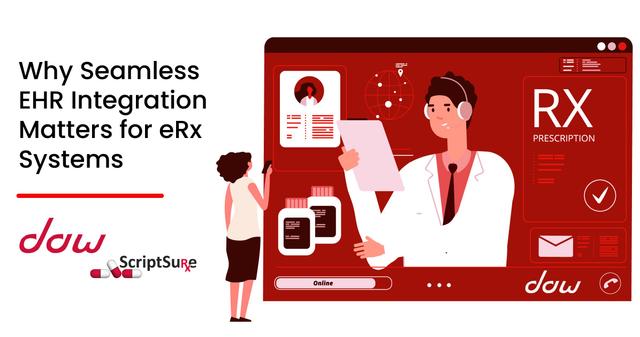
For EMR and EHR vendors, e-prescribing (eRx) is no longer just a feature users expect. It is a core part of the clinical workflow, and it directly affects provider satisfaction, patient safety, compliance, and the overall credibility of your platform.
When e-prescribing works well, providers can move from patient chart to medication selection to pharmacy submission without extra clicks, duplicate entry, or workflow disruption. When it does not, the problems show up quickly.
Poor integration creates friction across the entire prescribing process. Common issues include:
- Medication errors caused by missing or outdated patient data
- Provider frustration from duplicate entry and workflow switching
- More pharmacy callbacks because of incomplete or unclear prescriptions
- Compliance gaps around EPCS or state-specific prescribing requirements
- Lower adoption because the experience feels disconnected
- Hidden support and operational costs after go-live
For an EMR vendor, these issues can quickly become product issues, even if the root cause sits with the eRx partner. That is why vendor selection matters.
What EHR Integration Really Means
EHR integration is more than passing data between two systems. For an eRx system, real integration means the prescribing workflow can operate inside the provider’s existing clinical context.
A connected e-prescribing platform should help with:
- Patient demographic syncing
- Medication history visibility
- Allergy and interaction checking
- EPCS workflows for controlled substances
- Pharmacy selection and routing
- Prescription status and refill workflows
- Clinical decision support at the point of prescribing
- A user experience that feels tied to the broader EHR workflow
Some systems claim to integrate, but still rely on manual exports, repeated data entry, limited visibility, or a separate prescribing experience that pulls providers away from the chart. For an EMR buyer, that is not true integration. It is another workflow layer your users have to manage.
Buyers Actually Need:
Surescripts certification.
Any e-prescribing partner connected to your platform should be Surescripts-certified. This is a baseline requirement for routing prescriptions across the pharmacy network and giving providers a compliant prescribing experience.
EPCS readiness.
Electronic Prescribing of Controlled Substances is not a niche requirement. Providers increasingly expect EPCS to be part of the prescribing workflow, not a separate add-on. Your e-prescribing partner should already support DEA-accredited EPCS workflows so your team does not have to build or manage that complexity alone.
Workflow fit.
The best integration is the one providers will actually use. If eRx requires too many extra steps, too much toggling, or a workflow that feels disconnected from the patient chart, adoption suffers. EMR buyers should look for an e-prescribing partner that can support a fast rollout and a provider-friendly experience.
Integration flexibility.
Some EMR vendors need a fast embedded or white-label prescribing experience. Others need a deeper API integration that allows prescribing to live more fully inside their own interface. The right partner should support both paths and allow the integration to change as the platform matures.
Prescription accuracy.
Prescription accuracy is often underestimated during vendor evaluation, but it becomes very visible after launch. Inaccurate prescriptions create pharmacy callbacks, rework, patient delays, safety risks, and avoidable support volume. Your eRx partner’s accuracy record becomes part of your product’s reputation.
System availability and support.
E-prescribing is not a low-stakes workflow. When prescribing is unavailable or support is slow, your customers feel it immediately. EMR vendors should evaluate not only the integration itself, but also the partner’s history of uptime, support model, and ability to resolve issues quickly.
Benefits of a Connected eRx Platform
A strong eRx integration creates value for both the EMR vendor and the providers using the platform.
1. Fewer Errors and Safer Prescribing
Access to patient data, allergies, medication history, drug interaction checks, and clinical decision support helps providers make safer prescribing decisions at the point of care.
For EMR vendors, this is not just a clinical benefit. It also reduces downstream work caused by incomplete prescriptions, avoidable pharmacy calls, and provider uncertainty.
2. Less Duplicate Entry
When patient and prescribing data move between the EHR and eRx system, providers and staff do not have to copy information from one place to another. That saves time and reduces the risk of human error.
3. Better Provider Adoption
Providers are more likely to use tools that fit naturally into their workflow. A connected prescribing experience helps keep clinicians inside the system they already use, instead of forcing them into a separate tool for a high-frequency task.
4. Faster Time to Medication
Cleaner prescriptions and more complete routing help reduce delays between the visit and the pharmacy. That can improve the patient experience and reduce the number of follow-up calls into the practice.
5. Stronger Platform Value
For EMR vendors, eRx can make the overall platform feel more complete. Instead of sending users to another prescribing solution, the EMR becomes the place where the full medication workflow can happen.
Before choosing an e-prescribing platform, make sure to ask:
- Does this work natively with my current EHR?
- Is patient data shared in real time?
- Can I access CDS tools within my EHR environment?
- How are updates managed—automatically or manually?
- Who handles setup, and what does onboarding look like?
If they can’t answer clearly, keep looking.
DAW Systems’ ScriptSure eRx is built to support e-prescribing across a wide range of clinical and platform environments, including EHR vendors, EMR platforms, telehealth companies, practice management systems, and digital health companies.
DAW Systems has more than 30 years of e-prescribing experience. ScriptSure eRX has also been recognized by Surescripts for prescription accuracy and performance, including being named a 2025 White Coat Award winner.
For EMR and EHR vendors, ScriptSure eRX supports flexible integration paths designed to match your product strategy and development resources.